Because every micron matters.
In a hinge system, every sheet metal component operates under continuous mechanical interaction — sliding, rotating, flexing, and transferring load thousands of times throughout its service life. These movements may appear simple, but they take place under tight dimensional tolerances, where even minor deviations can influence overall system behavior.
Small variations in material thickness, hardness, or surface condition can affect friction levels, pivot alignment, load distribution, and ultimately the cycle life of the hinge. In high-frequency applications such as oven and appliance doors, these factors directly impact motion quality, durability, and long-term reliability.
That is why, at Atasan, we do not treat sheet metal as a generic raw material. We approach it as a precision-engineered component that plays an active role in the mechanical performance of the final assembly.
Each hinge design requires a carefully defined balance between strength, ductility, and formability. This balance must be preserved not only in the finished part, but throughout the entire manufacturing process — from stamping and forming to assembly and functional testing. The right sheet metal selection helps ensure predictable forming behavior, dimensional stability, and consistent interaction between moving parts.
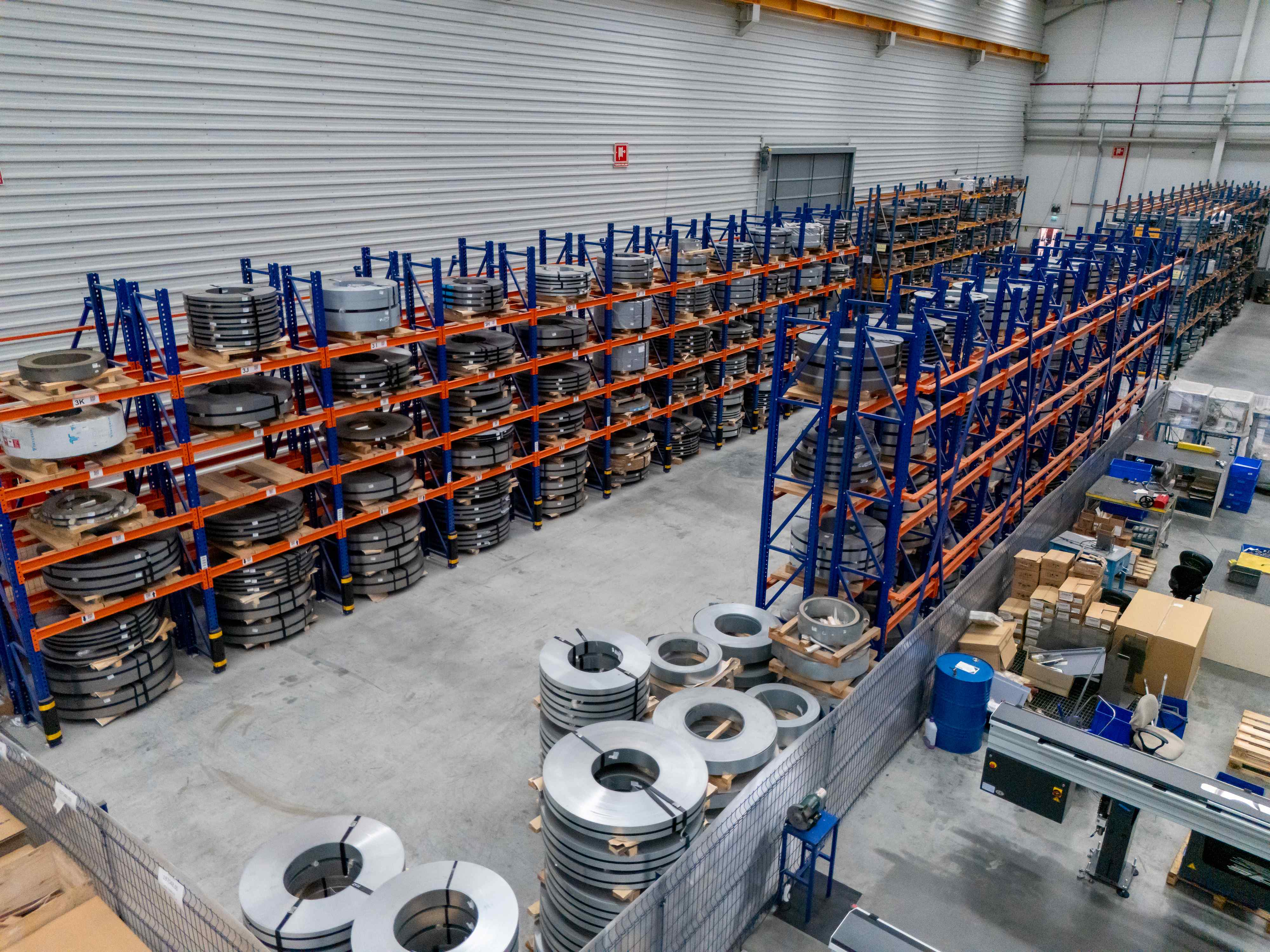
Over the years, we have developed long-term partnerships with a limited number of steel suppliers who understand the specific requirements of our hinge applications. Through continuous technical collaboration, these suppliers have built detailed know-how around Atasan’s material expectations — including grain structure control, surface finish characteristics, and coating compatibility.
This shared material expertise supports repeatable results in high-volume production and enables precise control over critical parameters that influence hinge performance.
As a result, our material strategy contributes to:
By addressing material quality at the earliest stages, potential performance variables can be managed before components ever reach assembly.
Precision does not start at the hinge pin or damper. It starts with understanding how sheet metal behaves under load, heat, and repeated motion. Atasan’s commitment to precision manufacturing is built on mastering not only production processes, but the materials that make those processes possible.